top of page
Displaced Children and Lost Schooling in Plateau and Benue
Context: In 2025 the Institute for Public Leadership at Maryland's School of Public Policy awarded me the Karabelle Pizzigati Initiative Graduate Research Fellowship, with $5,000 in research support. I used it on a question I'd been close to for years. Fifty-six percent of displaced children in Nigeria's conflict-affected states are out of school, and Plateau and Benue get far less attention than the Northeast.
What I did: I asked five questions. How does displacement change enrollment? Why do displaced girls fall further behind than boys? What do long interruptions cost children later? How do income and ethnicity shape who gets back to school? Which community-led responses help? To answer them, I synthesized data and reporting from UNICEF, UNHCR, Human Rights Watch, the International Crisis Group, academic studies and government sources. I used education-in-emergencies, conflict-sensitive education and intersectionality as the framework.
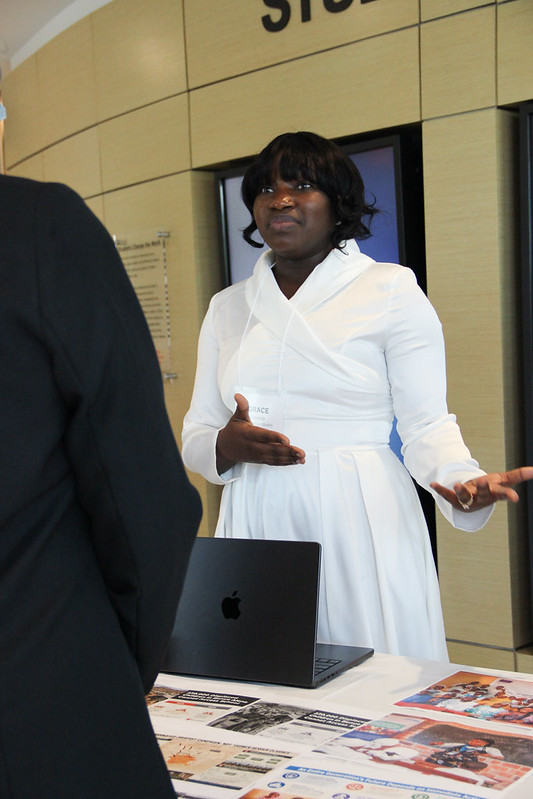
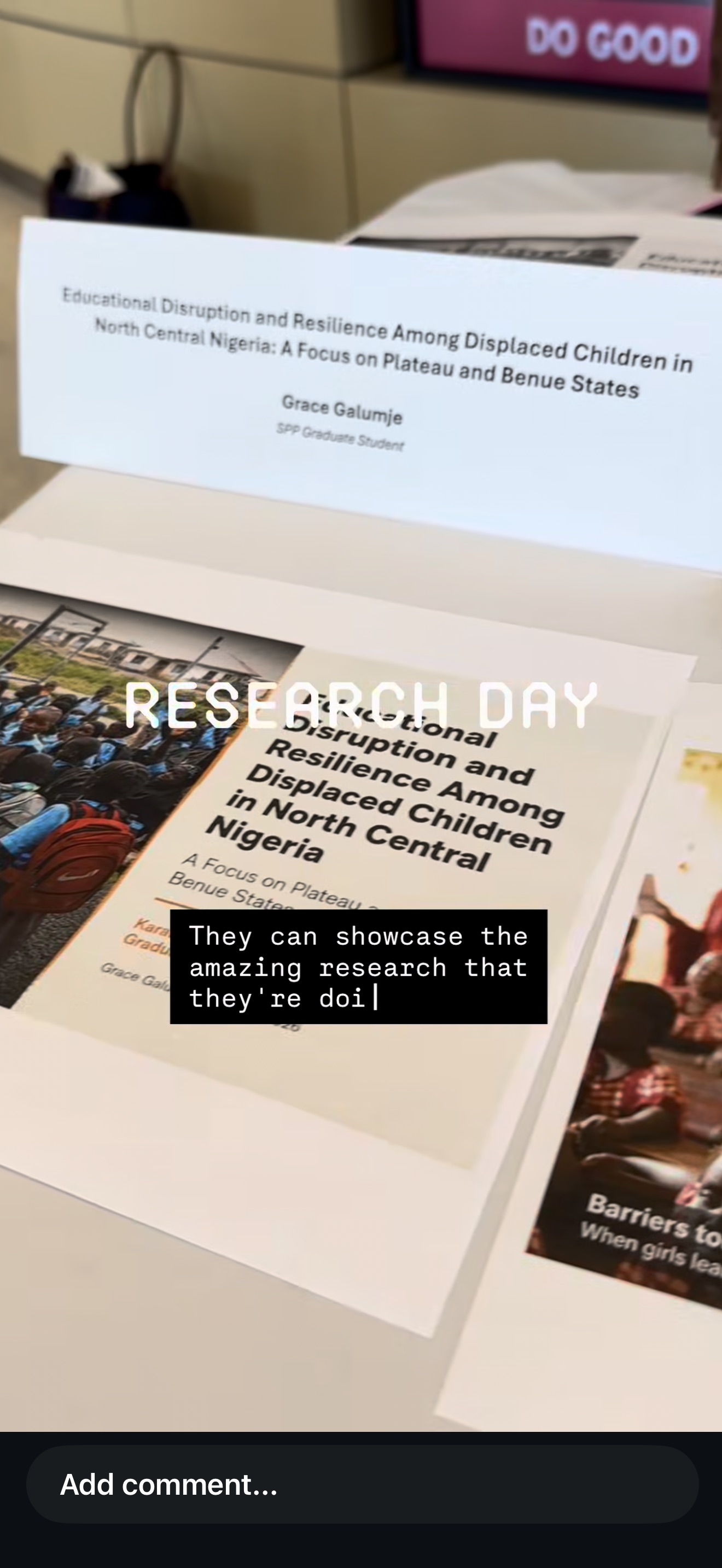
What came out of it: A full research paper (March 2026) with eight policy recommendations. Among them: ring-fence U.S. funding for education in displacement settings, make girls' education central to programming, and tie security assistance to accountability. I presented it at SPP Research Day on May 8, 2026, at Thurgood Marshall Hall, and later adapted it into my JSOU Press paper, Nigeria's Hidden War.
Skills: Education in emergencies | Child protection | Gender analysis | Research design | Policy recommendations | Research communication
Project type
Policy Research
Date
May 2026
Location
University of Maryland, College Park

01
Displaced Children and Lost Schooling in Plateau and Benue

01
A1C65FCD-141C-4A28-A619-AB223E1485A3

02
EB57974C-8D74-41F1-9FDC-C4E697AB5329
bottom of page